



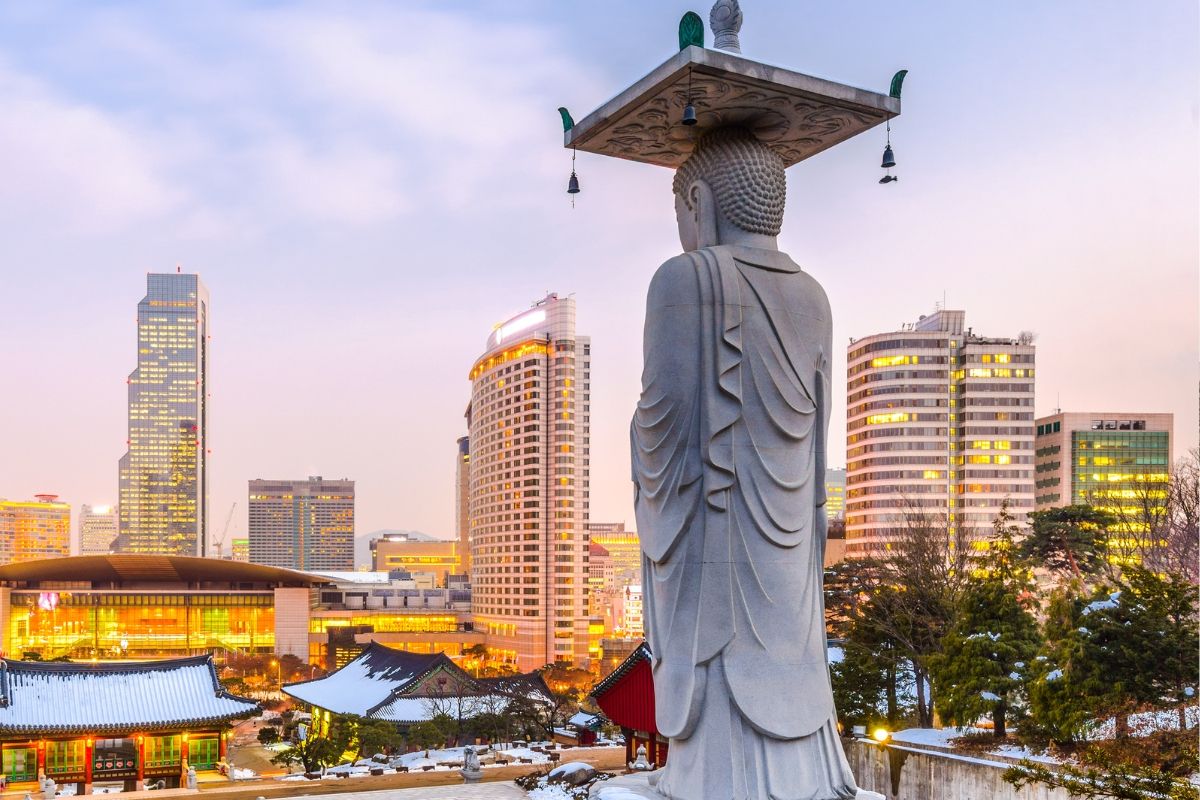
Beyond South Korea’s fast-moving cities and modern skyline lies another side of the country shaped by forested mountains, ancient temples, and centuries of Buddhist tradition. Throughout Korea, spiritual landmarks remain deeply connected to the natural world, offering travelers moments of stillness and reflection woven into the landscape itself.
For many visitors, these sacred spaces reveal a quieter and more contemplative side of South Korea that contrasts beautifully with the energy of Seoul and Busan.
Buddhism’s influence on Korean culture
Buddhism first arrived on the Korean Peninsula more than 1,600 years ago and quickly became one of the country’s most influential spiritual traditions. Its influence can still be seen today through Korean architecture, art, philosophy, and cultural values centered around balance, mindfulness, and harmony with nature.
Although modern South Korea is highly contemporary, Buddhist traditions remain visible throughout daily life. Temples continue to function as active places of worship while also serving as important cultural and historical landmarks.
For travelers, visiting these sites offers a deeper understanding of the philosophies and traditions that helped shape Korean identity for centuries.
Jogyesa Temple: spirituality in the heart of Seoul
Section Type: standardWidthImageS
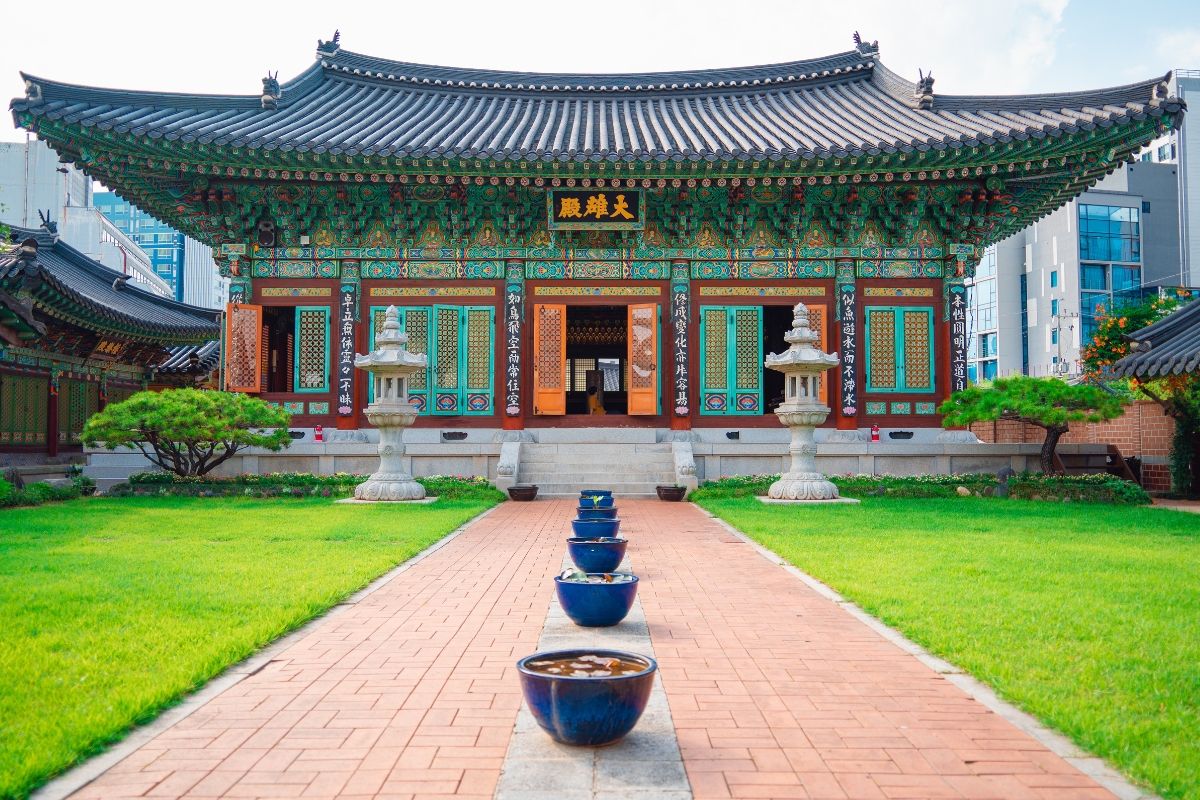
Even in the center of Seoul, Buddhist traditions remain present. Jogyesa Temple provides a striking contrast to the surrounding city, with colorful lanterns, intricate architecture, and quiet courtyards creating a peaceful atmosphere amid the urban energy.
As the chief temple of Korean Zen Buddhism, Jogyesa continues to serve as an active spiritual center where monks, worshippers, and visitors gather throughout the year.
The experience highlights one of the most fascinating aspects of South Korea: the way spiritual traditions continue to coexist naturally alongside modern city life.
Gyeongju and the legacy of the Silla Kingdom
Section Type: standardWidthImageS
Bulguska Temple, a UNESCO World Heritage Site located in Gyeongju, South Korea.
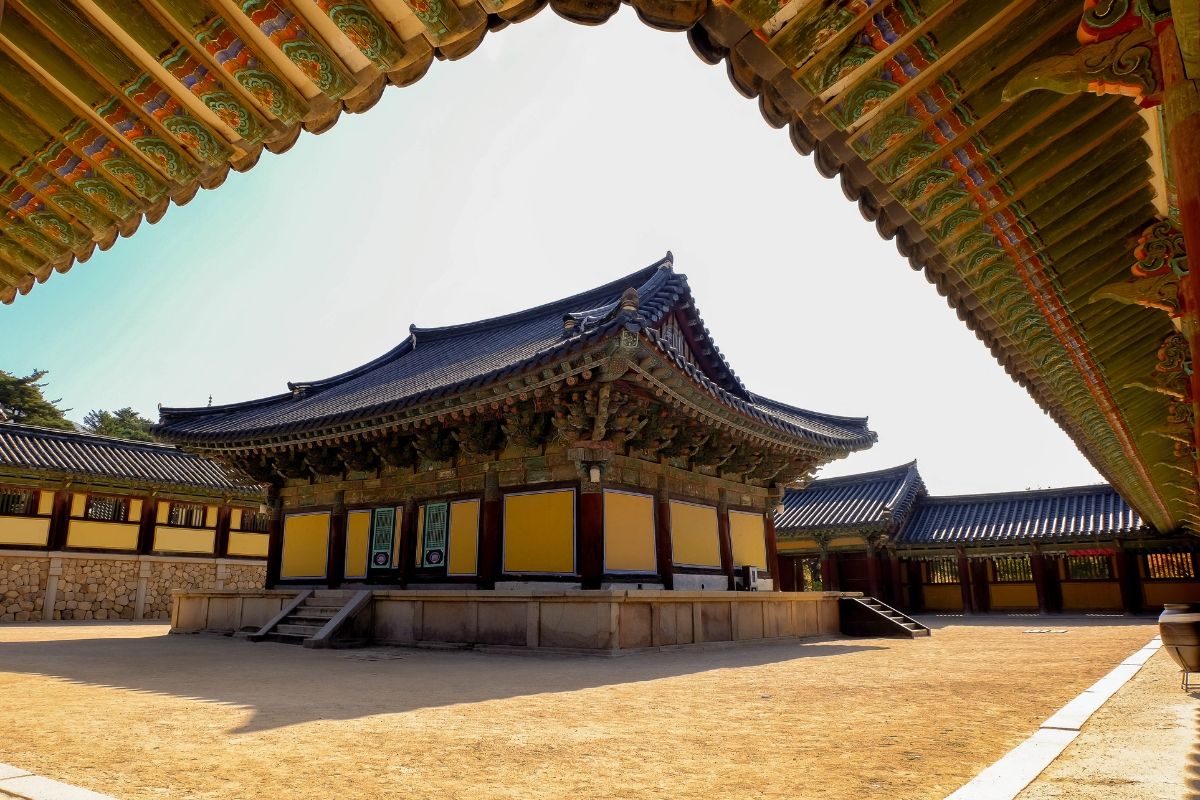
Some of Korea’s most important Buddhist landmarks are found in Gyeongju, the ancient capital of the Silla Kingdom and one of the country’s most historically significant destinations.
Bulguksa Temple, a UNESCO World Heritage Site, is widely considered one of Korea’s greatest examples of Buddhist architecture. Stone bridges, wooden halls, and detailed craftsmanship reflect centuries of spiritual and artistic tradition.
Nearby Seokguram Grotto overlooks the mountains and East Sea from a serene hillside setting. The stone Buddha statue housed within the grotto remains one of Korea’s most treasured cultural masterpieces.
Together, these sites offer insight into how Buddhism shaped Korean history, art, and architecture during the Silla Dynasty.
Nature, hiking, and reflection
Section Type: standardWidthImageS
Haedong Yonggungsa Temple located in Busan, South Korea.
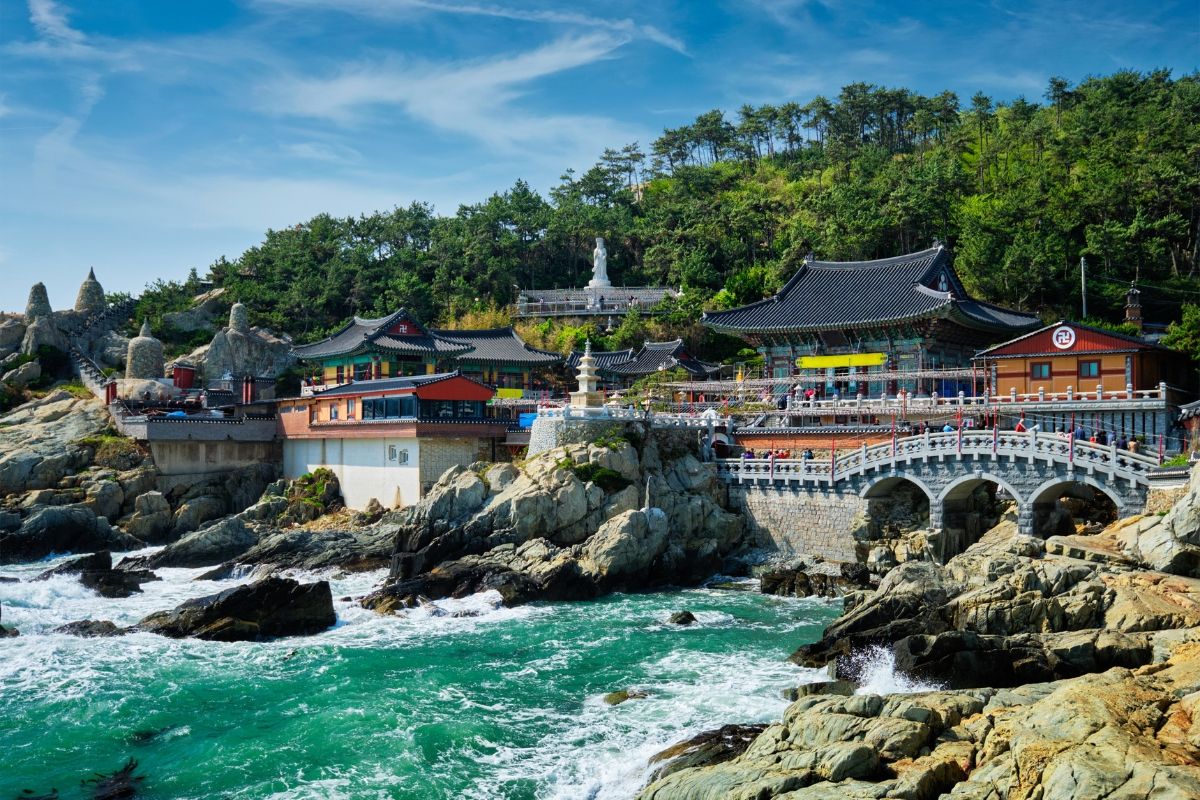
Korea’s spiritual traditions are deeply tied to the natural world. Many temples were intentionally built in mountain landscapes where forests, trails, and quiet surroundings encourage contemplation and balance.
Hiking remains an important part of Korean culture today, and trails often lead travelers through landscapes filled with stone pagodas, temples, and historic ruins.
The hike through Namsan Mountain near Gyeongju offers one of the clearest examples of this connection. The mountain is home to dozens of temples, Buddha carvings, stone pagodas, and historic relics scattered throughout the forested landscape, blending spirituality with nature and history.
For many Koreans, spending time in the mountains is not only recreational but restorative.
Finding stillness in South Korea
Some of the most memorable experiences in South Korea happen during its quieter moments: hearing temple bells echo through the mountains, walking beneath lanterns at dusk, or pausing beside centuries-old stone carvings hidden along a forest trail.
These experiences reveal a side of Korea that moves at a slower pace while remaining deeply connected to spirituality, history, and the natural world.
For travelers exploring South Korea, the country’s temples and mountain landscapes provide more than beautiful scenery. They offer insight into the enduring traditions and philosophies that continue to shape Korean culture today.
Section Type: cta
Interested in taking a luxury trip to South Korea tailored to your travel style? Browse our Private South Korea Tours or chat with a Destination Expert to get started!








Copyright © 2026 SA Luxury Expeditions LLC, All rights reserved | 8 The Green, Suite A, Dover, DE, 19901 | 415-549-8049
