




Rio de Janeiro’s Carnaval is one of the biggest parties in the world. But how much do you know about its economic impact?
It’s a random Tuesday in October and the sun is already beating down on Rio de Janeiro. Far from the tourist attractions of Corcovado, Sugarloaf, and Copacabana, in a warehouse on the outskirts of town, the full-time employees of the Grande Rio Samba School are hard at work. Here, a carpenter screws the arms of a giant robot to its torso. There, a welder reinforces the steel frame of one of next year’s floats. In the corner, an artist applies gold leaf to an intricate side panel.
Over the next two hours, as we tour the bowels of Grande Rio, it becomes abundantly clear that the term samba “school” is a grave misnomer. The 12 schools in the A-League (and those in the B and C leagues) are “companies” in every sense of the word. Carnaval is a year-round business. Grande Rio alone has 300 full-time employees – everything from artisans to dancers and bookkeepers to physiotherapists.
Section Type: standardWidthImageS
Photo from the Series "Samba Schools, Rio de Janeiro" Carnival, 1990. (Photo: Wigder Frota, Acadêmicos do Grande Rio 1990 - Wigder Frota, CC BY-SA 4.0)
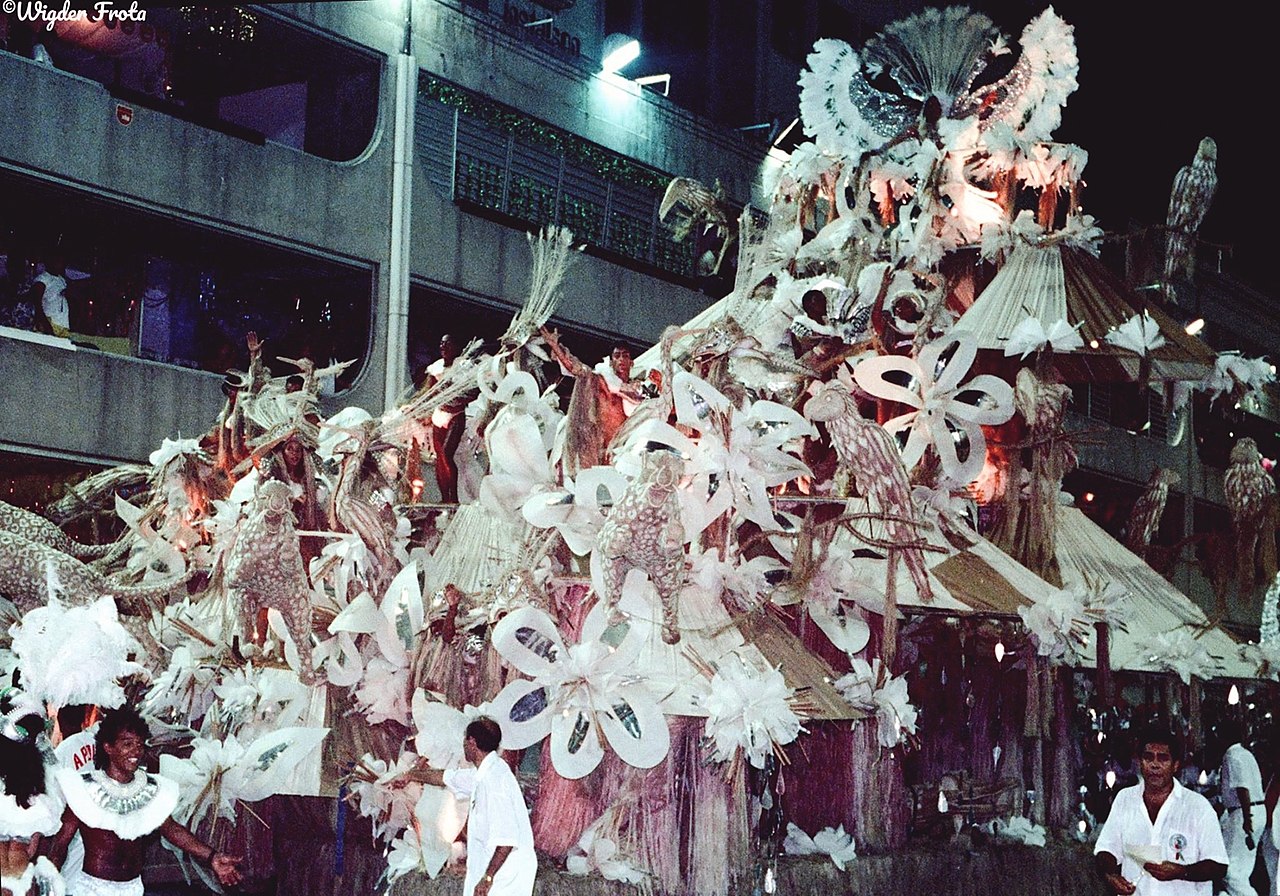
Many of these employees are funded by the public sector. National, regional, and local governments invest millions of reals into Carnaval, but they get far more than that back in return. As Ronnie Costa, the president of Rio’s tourism board, Riotur, explains, “For every one Brazilian real invested in tourism in Rio, it brings a three- to fourfold return.”
The numbers add up
An estimated seven million revelers, including hundreds of thousands of international tourists, provide an economic injection of $1 billion to the city’s economy. If you widen the scope to include Carnaval celebrations across Brazil, that figure swells to an annual economic impact of more than $2 billion. Partying in Brazil is serious business.
“When schools have more money, they have more resources to invest in equipment, costumes, and floats. Tourists will see something nicer, tidier, and more sophisticated; a cooler avenue and cooler parties; and a better day-to-day experience,” adds Carlos Werneck, president of tourism group Visit Rio.
All told, Rio’s Carnaval provides direct employment to 50,000 people and indirect jobs to a further 200,000. The impact on the 15,000 street vendors who sell everything from snacks to sunscreen is especially important. As one street seller, Rita de Cassia Oliveira, told the BBC, “It’s like Christmas for us.” Without the security of a monthly paycheck or a year-end bonus, people like Oliveira have to use the extra cash earned during the high season to support their families through leaner times.
But the economic benefits of investing in Carnaval go beyond individuals and families, argues Felipe Tavares, chief economist at Brazil’s National Confederation of Commerce. “When we have such a large development in Carnaval and tourism, we see significant social improvements in the region,” he says.
Section Type: standardWidthImageS
The crowd gathers in a multi-level building to view the parade. (Photo: Jia Li, Carnaval do Rio de Janeiro 652365, CC BY 2.0)
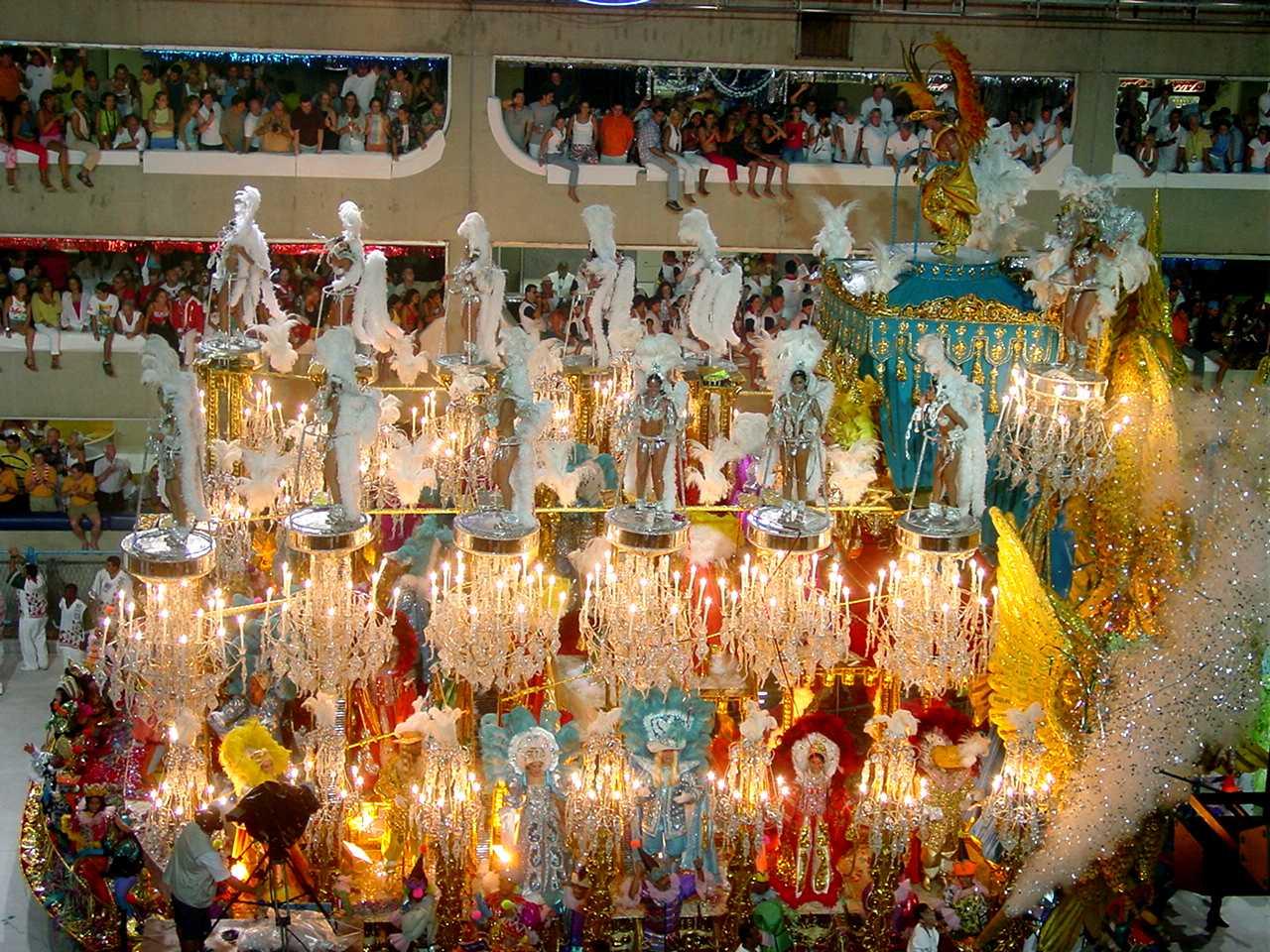
At SA Expeditions we’re firm believers that tourism can be a force for good, and Rio is a prime example of this. Investment in tourist infrastructure benefits locals and tourists alike. In 2023 alone, Brazil’s Ministry of Tourism financed 510 projects, renovating waterfronts, paving roads, and constructing event centers. While these may have been aimed at improving the tourist experience, it’s the locals who reap the long-term rewards.
Another important aspect, notes the Brazil 2044 website, “is the impact of tourism on public security. The presence of tourists requires an increase in security measures, which results in greater vigilance and policing in tourist areas. This not only provides a safer environment for visitors, but also for local residents, reducing crime rates and increasing the sense of security.”
Authenticity sells
Section Type: imageOnLeftParagraphToRight
It’s impossible to ignore the contradiction that lies at the heart of Carnaval’s economic success. Carnaval is such a big money spinner because of its authenticity. People know that it’s the real deal, and they are willing to travel to experience it. Carnaval started out as Entrudo, a chaotic pre-Lenten street festival involving music, masks, and playful mischief brought to Brazil by the Portuguese. But it soon developed a life of its own. Afro-Brazilians brought to the country as slaves added rich rhythms, dances, and spiritual elements, which evolved into samba. Indigenous Brazilians, meanwhile, also added bits of their cultures to the festivities. These days, Carnaval isn’t just an expression of 400 years of Brazilian history, it’s also a place where marginalized communities feel free to express themselves.
The spirit of samba. (Photo: Paulo Namorado from Brasil, Império Serrano, 1968 (2), CC BY-SA 2.0)
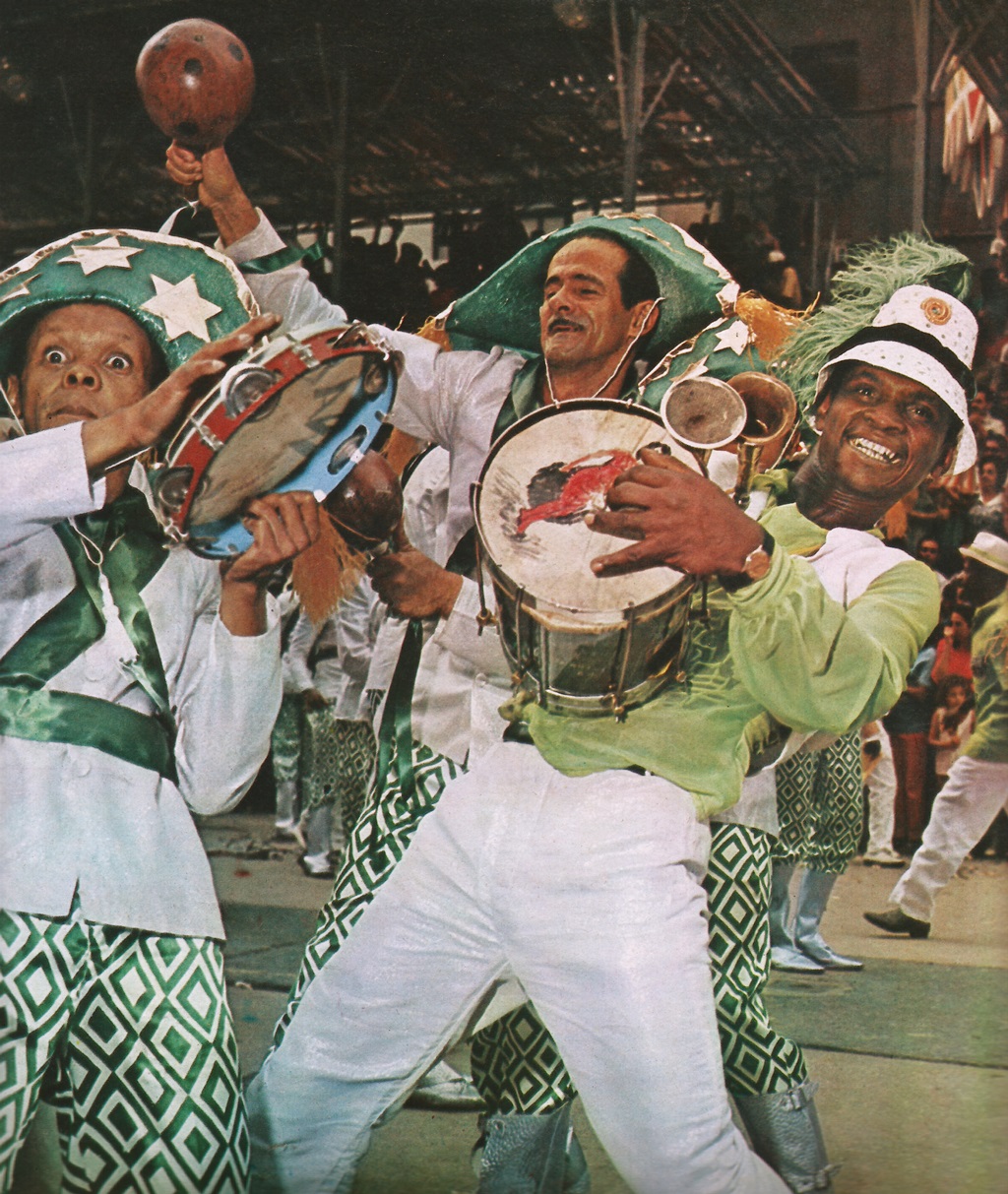
No wonder then that UNESCO has long recognized Brazil’s Carnaval as an important global example of “intangible cultural heritage.” And in 2024, a Brazilian federal law was passed that sought to “value and protect the historical, social, and cultural importance of one of the most emblematic popular festivals in Brazil and the world, the Rio de Janeiro Carnaval.” Law 15.188 was the brainchild of MP Laura Carneiro, who felt it was important “to say that Carnaval isn’t just that wonderful spectacle. Carnaval is a cycle of the creative economy that runs year-round.”
By the people for the people
On the first day of Carnaval, Rio’s mayor hands the key to the city to King Momo, the Carnaval monarch. As Mayor Edoardo Paes said in 2025, “Don’t call me. Call King Momo until Ash Wednesday comes … You should come for this guy. He’s going to be in charge of the whole thing.”
Of course, the mayor wasn’t being deadly serious. But there is still a very real meaning behind the symbolic act of ceding control of the city to a figure inspired by the ancient Greek figure of Momus, the personification of satire and mockery. As one writer put it, “Momo’s tenure is symbolic of society being turned upside down during Carnaval.”
And this, really, is the point of Carnaval. While the people at the front of the parades are paid performers, it is the millions of regular Cariocas (as Rio’s residents are known) who make Carnaval what it is. The whole city comes to a standstill as lawyers and plumbers, deckhands and actuaries don their glad rags and take to the streets for the weeks-long celebration. Public sector investment has made Carnaval more professional and more profitable, but the essence of the celebration still beats in the heart of every Carioca.
As the saying goes in Brazil, “o ano só começa depois do Carnaval” – the year only starts after Carnaval!
Section Type: standardWidthImageS
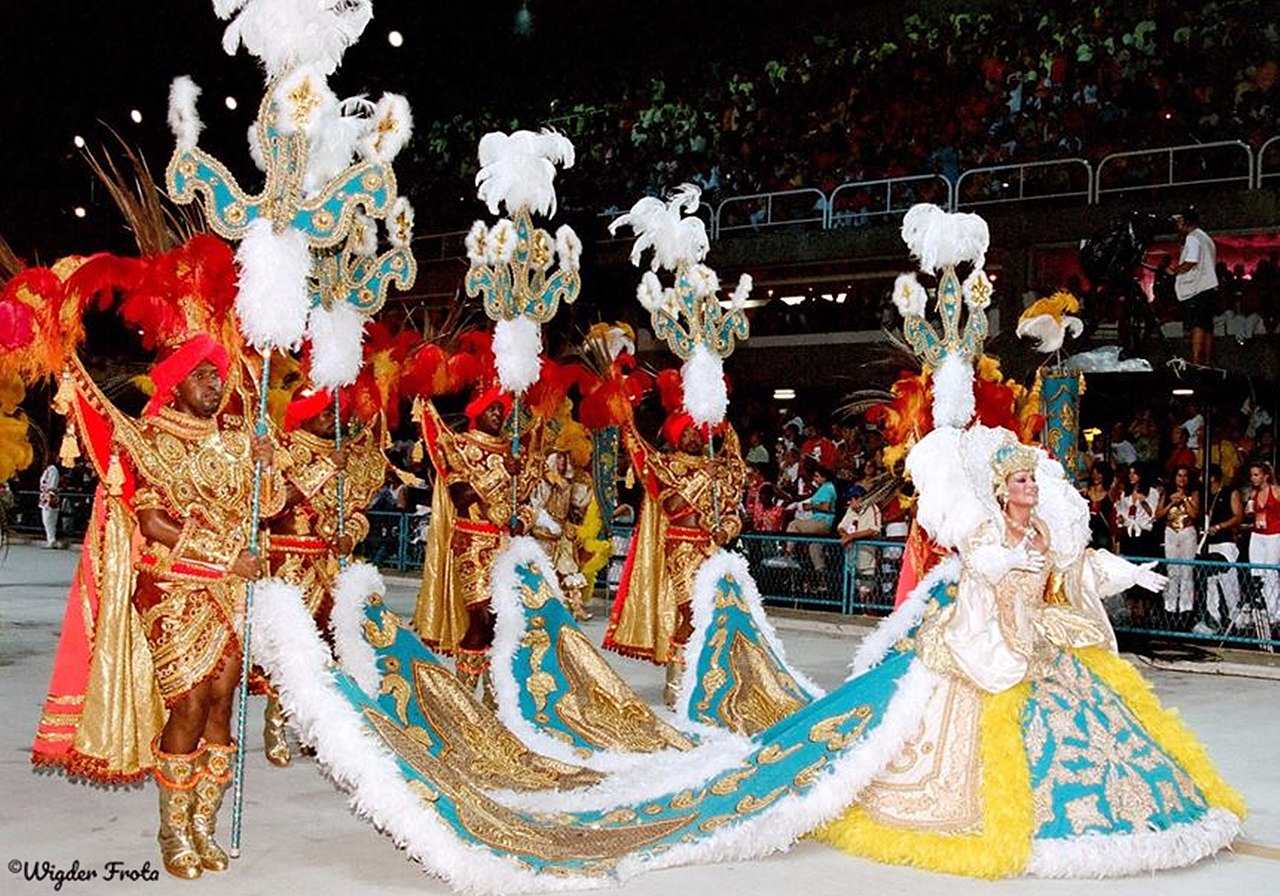
Photo from the Series "Samba Schools, Rio de Janeiro" Carnival, 2002. (Photo: Wigder Frota, Acadêmicos do Grande Rio 2002 - Wigder Frota, CC BY-SA 4.0)
Section Type: cta
Whatever time of year you choose to visit Rio de Janeiro, we’ll help you find a way to experience the spirit of Carnaval. Check out our most popular Brazil itineraries. Then chat with a Destination Expert about crafting a trip that beats to your own personal rhythm.







.jpg)
.jpg)






Copyright © 2026 SA Luxury Expeditions LLC, All rights reserved | 8 The Green, Suite A, Dover, DE, 19901 | 415-549-8049